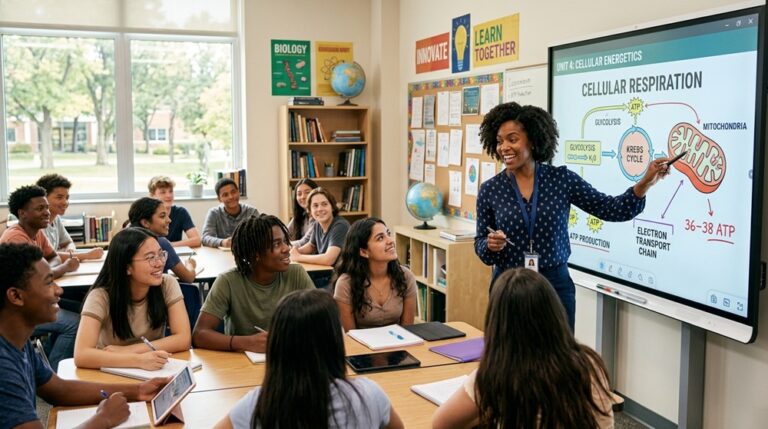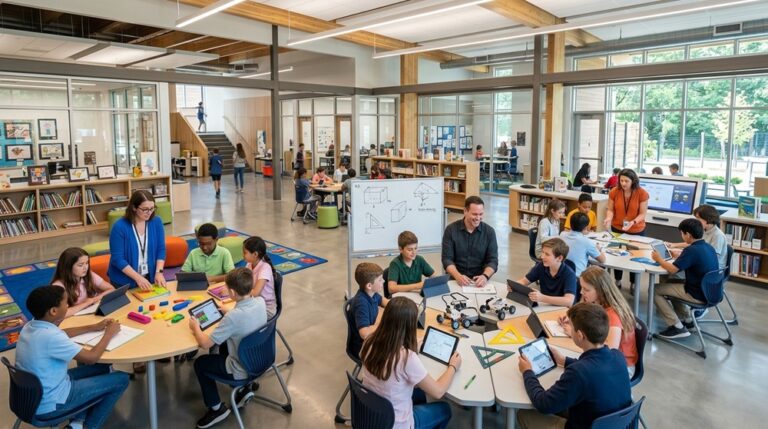

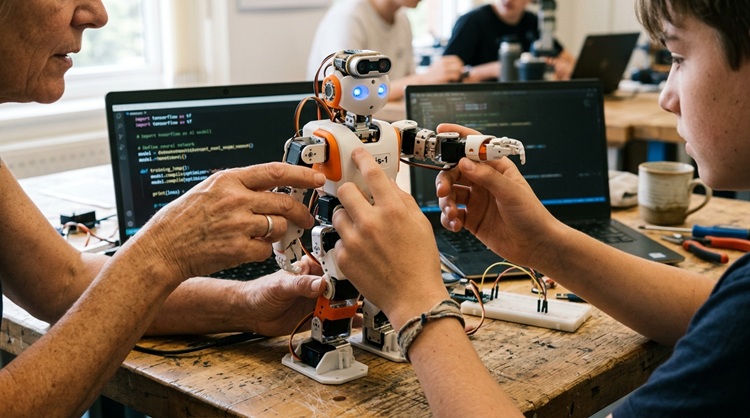
With the advent of artificial intelligence (AI), today’s learning landscape is rapidly evolving and reshaping the teaching methods and learning process. AI tools have been poised to revolutionize teaching and learning, providing more efficient, interesting, and data-rich experience for both teachers and students. With the shift towards a digital world in education, AI is proving to be a vital component of the learning experience in schools.
AI can provide tailored learning plans for students and real-time assistance. It offers teachers beneficial information about student learning and simplifies daily work. The technology opens up promising possibilities; it also brings up important issues regarding privacy, ethics and the future of teachers.
The Growing Role of Artificial Intelligence in Education
Artificial Intelligence (AI) is defined as a computer system that mimics human cognition, like pattern recognition, language interpretation, and forecasting. Educational platforms can use the technique of machine learning to respond to individual students’ learning needs by studying their behavior on the platform.
Nowadays, AI is being used in the following ways:
chill out in a relaxed setting. care about your comfort level in a relaxed environment.
- Virtual classrooms
- Assessment platforms
- Intelligent tutoring systems
- Student support services
These innovations are ushering a more responsive, customized school experience for students.
Using AI to enable personalised learning.Leveraging AI for personalised learning.
Personalized learning is one of the greatest advantages of AI in the field of education.
The traditional classroom settings mean that teachers have to serve several learners at once. These systems can leverage AI algorithms to sift through learning progress and pinpoint areas of strength and weakness, and suggest personalised resources for every learner.
How adaptive learning works is the trick.The magic is in how adaptive learning works.
An Adaptive learning platform is software that adapts based on student performance by employing machine learning algorithms. A student who is having trouble understanding a concept can get more information, more practice problems or other resources to help with learning.
Benefits include:
- Individualized learning paths
swift identification of learning gaps - Improved knowledge retention
- Increased student confidence
Key Takeaway: AI can be used to develop personalized learning experiences for every learner and their individual speed.
Virtual Tutors and Intelligent Tutoring Systems
Students can access academic support whenever they need it via AI-powered virtual tutors and intelligent tutoring systems, beyond the classroom.
These tools can:
- Answer questions instantly
- Offer step-by-step explanations
- Deliver personalized feedback
- Support independent learning
Pupils are helped when they need it and teachers acquire support to reinforce their lessons given at school.
Enhancing Student Engagement
Any AI application that is interactive can enhance learning by tailoring suggestions, introducing games and providing instant feedback.
If a student is provided content appropriate for their learning level and interests, he/she may be more motivated to be actively involved in the learning process.
Use of AI-powered engagement tools can boost engagement and enhance learning experiences.
Learning analytics will enable the personalization of learning.Learning analytics will be the key to personalizing learning.
AI has also brought revolution in the way teachers manage and track students’ progress.
Data-Driven Insights for Teachers.
AI systems can use learning analytics to determine trends in student performance, attendance, and engagement. These observations assist teachers in decision-making and targeted support as necessary.
Here are some of the ways teachers can use analytics:
- Track academic progress
Identify learning difficulties at an early stage - Personalize instruction
- Improve assessment strategies
Reducing Administrative Work
Classroom automation enables teachers to automate time-consuming tasks like quiz marking, organization of assigned tasks and creation of reports.
This allows teachers to concentrate more on instruction and mentoring, and student interaction.
Addressing challenges and considerations of AI in the classroom.Dealing with challenges and considerations of AI in the classrooms.
While AI is beneficial, there are also challenges that need to be overcome in a responsible way within the context of a school.
Potential concerns include:
Data privacy and security for students are maintained.
Algorithmic bias and fairness
- Overreliance on technology
- Digital access inequalities
Ensure that AI-generated content is used ethically.Use AI-generated content responsibly.
Educational institutions need to have clearly defined policies and make sure that technology is used as a tool to enhance rather than supplant real-world human interactions.
Incorporating AI into education should be innovative and responsible, yet also grounded in best practices.
The Future of AI-Powered Education
The influence of AI in education is poised to become even more significant as technology advances.The use of AI in education will become even more integral to the learning process as the educational technology sector continues to expand and evolve. There could be improved methods for adaptive learning, improved virtual tutoring, and better understanding of student success in the future.
The best classrooms, though, will likely be those that integrate best practices in AI with the experience, caring and instruction of human teachers.
Conclusion
AI is transforming the educational landscape by enabling personalized learning, boosting student engagement, facilitating learning analytics, and streamlining administrative processes. However, the use of AI in education is not without its challenges, such as privacy, ethics, and accessibility concerns.There are undeniable issues with privacy, ethics, and access, however, AI can make it possible to provide more responsive education that is effective. The relationship between the technology and teacher will become important in realizing meaningful innovation for future generations of education.