

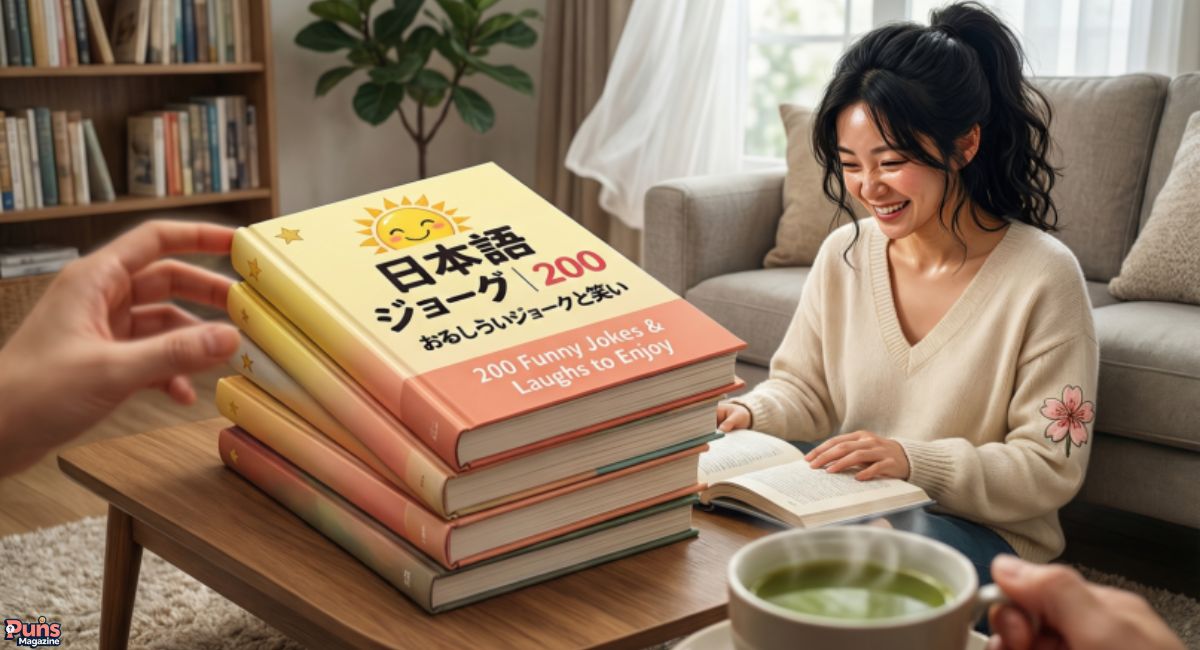
Japanese Jokes crosses cultural boundaries in fascinating ways. Learning japanese jokes in english opens doors to understanding a completely different comedic tradition. These jokes reveal how Japanese people view the world around them. You’ll discover wordplay that works brilliantly in both languages. Japanese jokes in english let you appreciate puns without speaking Japanese fluently. They’re perfect for language learners and comedy fans alike.
The best japanese jokes in english capture that unique blend of wit and cleverness. Some rely on cultural references you’ll recognize immediately. Others play with language in unexpected ways. Japanese jokes in english range from silly to sophisticated. They include everything from classic one-liners to elaborate story-based humor. You don’t need special knowledge to enjoy most of them. These jokes prove that laughter truly is universal. Get ready to explore comedy from a fresh perspective.
Common Japanese Jokes
Japanese humor blends clever wordplay with everyday situations that make people smile constantly.
- Why did the sushi chef quit? Rice pay issues.
- Japanese ghosts never scare anyone. They’re too polite always.
- What do Japanese cats say? Nyan nyan all day.
- Why are Japanese trains never late? Shame is real.
- How do Japanese people start parties? Bowing until dizzy.
- What’s a samurai’s favorite drink? Sword-a with ice cubes.
- Why don’t Japanese phones break? They bow when dropped.
- What do Japanese trees say? Leaf me alone please.
- How do ninjas greet friends? Disappear then reappear suddenly.
- Why are Japanese gardens peaceful? Rocks meditate too obviously.
- What’s a sumo wrestler’s favorite food? Heavy rice bowls.
- How do Japanese people exercise? Bowing counts as cardio.
- Why are Japanese toilets smart? They passed entrance exams.
- What do Japanese mountains wear? Snow caps year round.
Japanese Dad Jokes

Dad jokes from Japan mix terrible puns with wholesome family humor everyone enjoys.
- Why did dad bring chopsticks fishing? Catch sushi directly.
- What’s a Japanese dad’s favorite season? Fall asleep time.
- How do dads make rice? With dad-ication always.
- Why don’t Japanese dads dance? Two left feet culturally.
- What’s dad’s favorite martial art? Nap-jitsu every afternoon.
- How do dads tell time? When stomach growls loudly.
- Why did dad become carpenter? Wood you believe it.
- What’s a dad’s favorite fish? The one that’s free.
- How do Japanese dads exercise? Remote control finger lifts.
- Why don’t dads cook? Kitchen already has chef.
- What’s dad’s favorite hobby? Pretending to work hard.
- How do dads take photos? Thumb over lens always.
- Why did dad learn origami? Folding laundry counts.
- What’s a dad’s superpower? Embarrassing kids everywhere naturally.
Favourite Japanese Jokes
These beloved japanese jokes in english bring smiles across all age groups.
- Why are Japanese vending machines everywhere? Convenience is king.
- What do cherry blossoms do? Fall gracefully every spring.
- How do Japanese students study? All night every night.
- Why are convenience stores open? Japan never sleeps.
- What’s Japan’s favorite season? Sakura blooming time always.
- How do salarymen commute? Packed like sardines daily.
- Why do Japanese love uniforms? Matching is comforting.
- What’s Tokyo’s favorite pastime? Walking really fast everywhere.
- How do Japanese queue? Perfectly straight lines always.
- Why are Japanese festivals fun? Food stalls everywhere.
- What do Japanese summers bring? Humidity and cicadas screaming.
- How do people stay cool? Portable fans all day.
- Why are Japanese winters cold? Drafty houses no insulation.
- What’s Japan’s favorite mascot? Everything has cute characters.
The Hawaiian Dentist Joke
The classic Hawaiian dentist joke showcases clever wordplay that translates beautifully everywhere.
- What time does Hawaiian dentist work? Tooth hurty exactly.
- Why did dentist move Hawaii? Better tooth weather.
- How do Hawaiian dentists greet patients? Aloha open wide.
- What’s a Hawaiian dentist’s favorite dance? Hula around cavities.
- Why are Hawaiian dentists happy? Beach after work daily.
- How do they fix teeth? With island precision always.
- What’s their favorite tool? Surfboard shaped drill obviously.
- Why do patients love them? They’re cavity cool.
- How do they take breaks? Surfing between appointments naturally.
- What’s their favorite snack? Pineapple after cleaning teeth.
- Why are appointments relaxing? Ocean sounds playing softly.
- How do they schedule? When waves are flat.
- What’s their motto? Smile like you’re on vacation.
- Why did they study dentistry? Brighten smiles like sunshine.
Read more Gambling Jokes That Will Make You Laugh
What is Dajare?
Dajare represents Japanese puns using similar sounds to create humorous wordplay moments.
- What’s dajare’s main ingredient? Sound alike words always.
- How do Japanese make dajare? Twist words cleverly.
- Why do people groan? Puns are intentionally bad.
- What’s dajare’s purpose? Making everyone laugh awkwardly.
- How often do Japanese use it? Every single day naturally.
- What makes good dajare? Timing and confident delivery.
- Why do kids love it? Simple silly word games.
- How do adults react? Eye rolls then smiles.
- What’s the best setting? Casual conversations with friends.
- Why is dajare popular? Easy humor for everyone.
- How do you learn it? Practice bad puns constantly.
- What’s the worst dajare? The one dad just told.
- Why keep making them? Laughter outweighs the groans.
- How does dajare work? Similar sounds different meanings.
Funny Japanese Puns to Know
Japanese puns rely on homophones and sound similarities for maximum comedic effect.
- Why did melon marry? Honeydew love each other.
- What’s a bear’s favorite food? Kuma-quat for breakfast.
- How do dolphins communicate? They whale on forever.
- Why are pandas tired? Bamboo-zled all day long.
- What’s a cat’s job? Meow-nager at office.
- How do rabbits travel? They hop on trains.
- Why are elephants forgetful? Trunk-ated memory always.
- What’s a monkey’s favorite fruit? Ba-nana split obviously.
- How do penguins stay cool? Ice to meet you.
- Why are lions leaders? Roar-ganizing everyone efficiently.
- What’s a tiger’s strength? Purr-severance through challenges.
- How do giraffes communicate? Neck-working with others.
- Why are foxes clever? They’re sly-ent observers.
- What’s a wolf’s motto? Howl-ways stay together.
Types of Japanese Puns
Japanese wordplay includes several distinct styles that create different humorous effects consistently.
- What’s goroawase? Number word puns always.
- How does kakekotoba work? Double meaning words.
- Why use onomatopoeia? Sound effects add humor.
- What’s shareme? Clever witty wordplay.
- How do mojiri work? Twisting existing phrases.
- Why are they effective? Cultural knowledge required.
- What’s the simplest type? Basic sound substitution.
- How do learners practice? Start with easy puns.
- Why study pun types? Understand Japanese humor better.
- What’s most challenging? Context dependent jokes.
- How do natives react? Instant recognition and laughter.
- Why are puns everywhere? Language structure allows it.
- What makes them memorable? Unexpected word combinations.
- How do they evolve? New slang creates opportunities.
Ika ga ii ka? (イカがいいか?)
This classic dajare asks which squid is good using playful sound repetition.
- What does ika mean? Squid in Japanese language.
- How does this work? Ika sounds like ii ka.
- Why is it funny? Perfect sound match timing.
- What’s the literal meaning? Is squid good question.
- How do natives react? Groan then chuckle always.
- Why is it popular? Simple memorable wordplay.
- What’s the hidden joke? Three ikas in row.
- How do learners remember? Easy pronunciation practice.
- Why teach beginners this? Gateway to Japanese puns.
- What’s the response? Usually laughter or sighs.
- How often is it used? Party ice breaker constantly.
- Why does it work? Sound repetition is satisfying.
- What makes it classic? Timeless dajare example perfectly.
- How to use it? Casually during dinner conversations.
Sukii wa suki (スキーは好き)
This pun plays on skiing and liking having identical pronunciation cleverly.
- What does sukii mean? Skiing sport activity.
- How about suki? Like or love something.
- Why is this clever? Same sound different meaning.
- What’s the joke? Do you like skiing.
- How do Japanese react? Immediate recognition groan.
- Why is it effective? Perfect homophone match.
- What’s the context? Winter sports conversations.
- How do learners use it? Practice pronunciation skills.
- Why teach this early? Simple grammar structure.
- What makes it memorable? Seasonal relevance always.
- How often is it told? Every ski season.
- Why do people enjoy it? Clean family friendly humor.
- What’s the delivery? Casual confident tone.
- How to remember it? Think winter sports fun.
Kaeru ga kaeru (カエルが帰る)

This wordplay uses frog and return home sharing the same sound.
- What does kaeru mean first? Frog hopping around.
- What’s the second meaning? Returning home safely.
- Why is this funny? Double meaning confusion.
- How does it work? Same word different context.
- What’s the joke setup? Frog is returning home.
- Why do children love it? Easy animal reference.
- How do teachers use it? Language learning tool.
- What’s the visual? Frog hopping toward home.
- Why is it effective? Clear imagery created.
- How do natives explain it? Simplest dajare example.
- What makes it classic? Taught to young learners.
- Why does it stick? Animal connection memorable.
- How to use it? Bedtime story humor.
- What’s the charm? Innocent playful wordplay.
Conclusion
You’ve just explored a wonderful collection of japanese jokes in english that showcase Japan’s unique humor. These japanese jokes in english prove that comedy transcends language barriers beautifully. From clever dajare to silly dad jokes, you’ve discovered how Japanese wordplay works. Japanese jokes in english offer something for everyone who loves to laugh. They mix cultural insights with pure silliness perfectly. You can share these japanese jokes in english with friends and family anytime. They’re conversation starters that bring people together through shared laughter.
Now you understand why japanese jokes in english are so beloved worldwide. These jokes aren’t just funny—they teach you about Japanese culture too. You’ve learned about puns like “kaeru ga kaeru” and “ika ga ii ka” effortlessly. Japanese jokes in english make language learning more enjoyable and memorable. Keep practicing these jokes with others who appreciate good humor. Laughter connects us all regardless of where we’re from. Share these japanese jokes in english and spread joy everywhere you go.